
 By Talia Robinson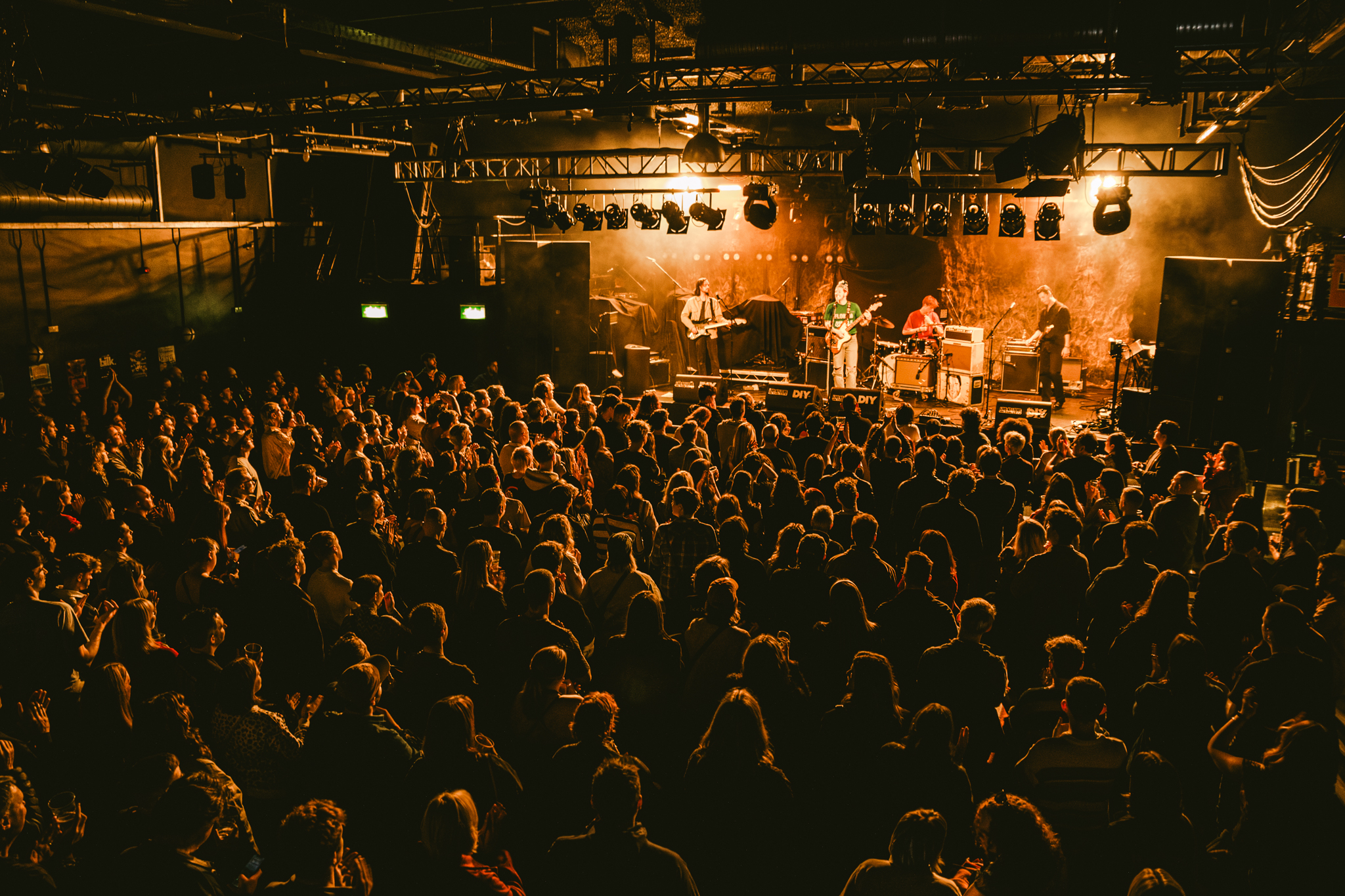
Photo Credit: Georgina Hurdsfield
November rolls around and the air in Leeds suddenly feels electric with the kind of cold that sharpens sound. It’s that weekend again – the one where the city briefly turns itself inside out, spilling its beating musical heart into every backroom, chapel, and upstairs bar.
Live at Leeds In The City isn’t just a ‘city-wide festival’, it’s a pilgrimage. A long, sprawling exhale of noise and sweat, the kind that only a city like Leeds, with its radical DIY spirit and bruised romanticism, could produce. The magic happens in the margins – the bands you catch between pints, the names you scribble down between encores – and this year’s line- up feels particularly charged with intent.
Jalen Ngonda headlines, a choice that says everything about what this festival believes in. Ngonda’s soulful blend of classic melody and contemporary urgency carries both reverence and revolt. It will be a communion – not a spectacle – when he closes the festival. Before that, the word-of-mouth hysteria will be humming through the crowd for Fat Dog. Their sweat-slicked, apocalyptic energy is a sound that doesn’t so much fill a room as it does consume it, and we anticipate a blur of bodies, distortion, and delirium to be left in their wake.
If there’s one name quietly rippling through the Leeds lineup this year, it’s Keo – a band who don’t just perform songs, but gutturally summon them. While their set may not be the loudest of the weekend, it might be the one that lingers longest. You’ll leave their show with your heart oddly rearranged, reminded that intimacy, too, can be a form of rebellion.
Katy J Pearson brings a softer, crystalline counterpoint – her voice the aural equivalent of golden light filtering through November drizzle. There’s a fragile optimism in her songwriting, similar to the likes of Nottingham quartet Divorce. Equal parts catharsis and comedy, the band have a knack for turning pain into theatre: one minute they’re gutting you with a line about heartbreak, the next they’re laughing at the absurdity of being human.
Since its inception nearly two decades ago, Live at Leeds has stood for one thing above all: discovery. It’s never been about pyrotechnics or massive LED screens, more so the proximity and the lurching joy of realising you’ve just stumbled into your new favourite band, plus the likelihood that this could very well be the last time you witness them in such a small capacity.
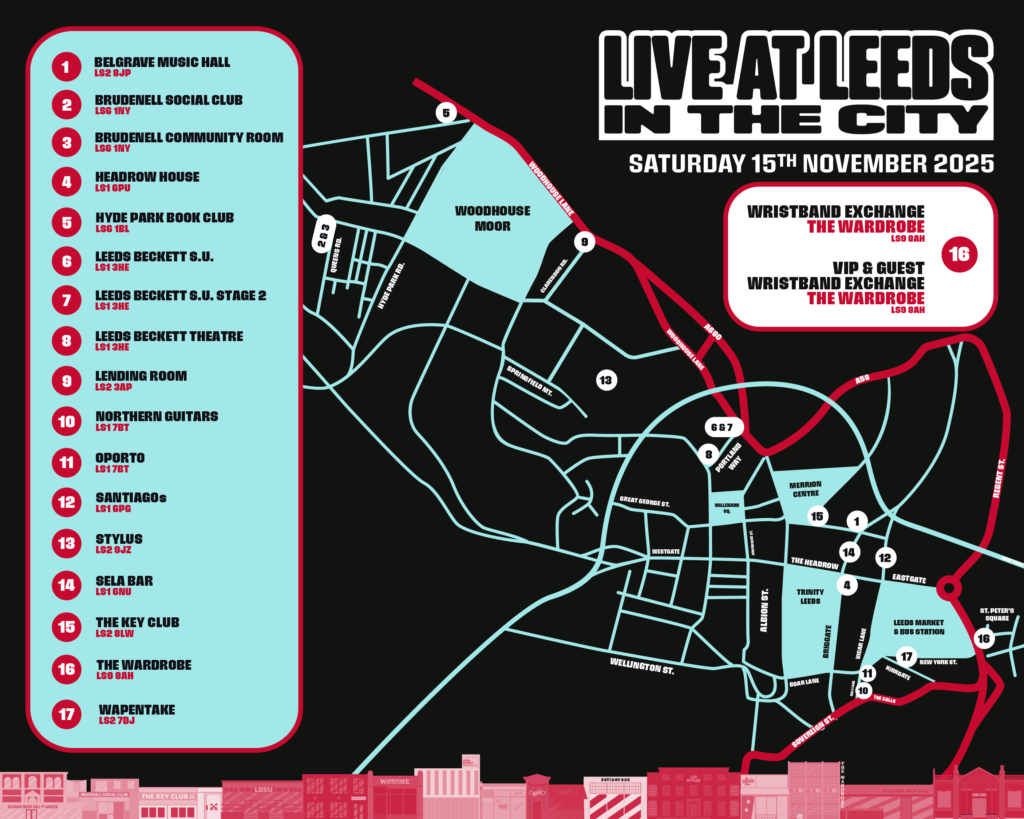
Across a dozen venues – from Belgrave Music Hall’s glowing rooftop terrace to the beer-slick basement at Headrow House – the city becomes a circuit board of live music where every performer, every audience member, and every stomp completes the loop.
Every year, Live at Leeds uncovers artists who sound like they’re standing on the edge of something. This year, that edge gleams with the promise of acts like Hey, Nothing with their fragile harmonies and sound like the soft ache of leaving the house you grew up in. An intimacy in their lyricism that makes you want to close your eyes mid-set and just trust the sound to hold you. Arkayla, by contrast, bring the kind of kinetic, genre-fluid energy that jolts you awake. Their songs weave R&B confidence into alt-pop shimmer – all neon rhythm and bold sincerity – you can almost see the electricity crackle.
Lavelle offers something slower, stranger, more hypnotic – a soundscape of dusky synths and wounded poetry. Her presence reminds you that Live at Leeds isn’t just about guitars and grit, it’s about textures, about sound as emotional architecture. If you’re looking for something more combustible, Bleech 9:3 will more than likely deliver chaos. Lyrics that oscillate between rage and revelation. Watching them will feel like being inside a storm you don’t quite want to escape.
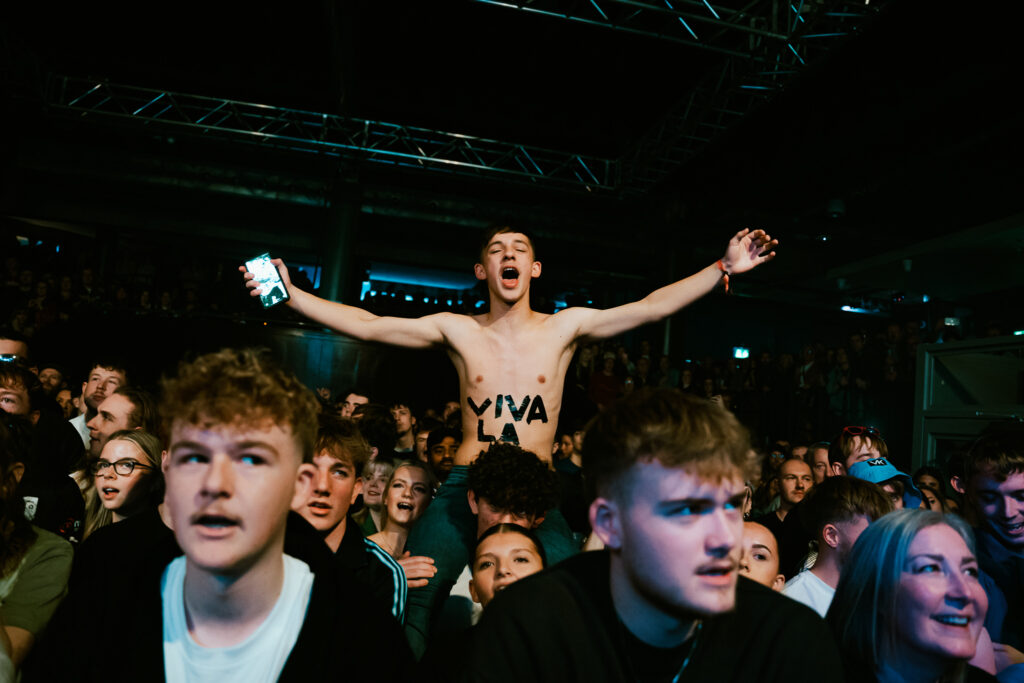
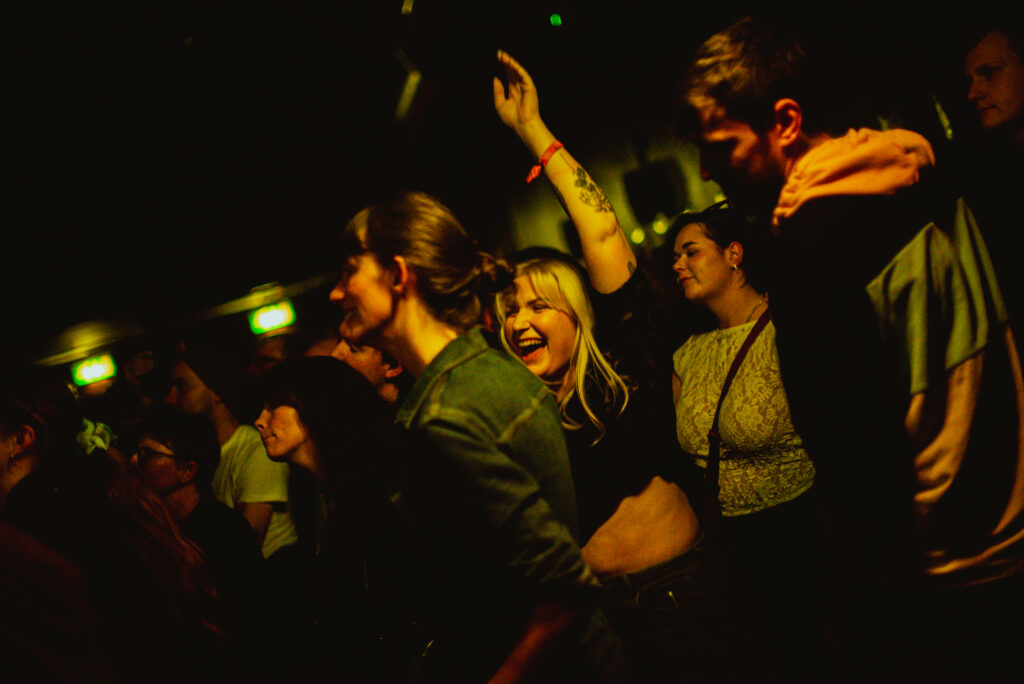
There’s something radical about the way Live at Leeds uses space. The sticky floors, the dim lights, the sound engineers leaning into the hum of an amp – each venue feels like a different verse in the same song. That intimacy is what sets it apart from most festivals. There’s no hierarchy of stages because every performance has the potential to be the one show that you’ll talk about for years.
Maybe that’s the point of Live at Leeds In The City not to deliver a single, definitive moment, but to remind us that music’s magic lies in its multiplicity. It’s a thousand moments, fleeting and fragile and furious, all happening at once. You can’t catch them all. You’re not supposed to. You just have to keep walking from one door to the next, one band to the next, one spark of sound to another, trusting that somewhere, just around the corner, something extraordinary is waiting.
 Esme Campbell
  Alexandra Pullen