
 By Alexandra Pullen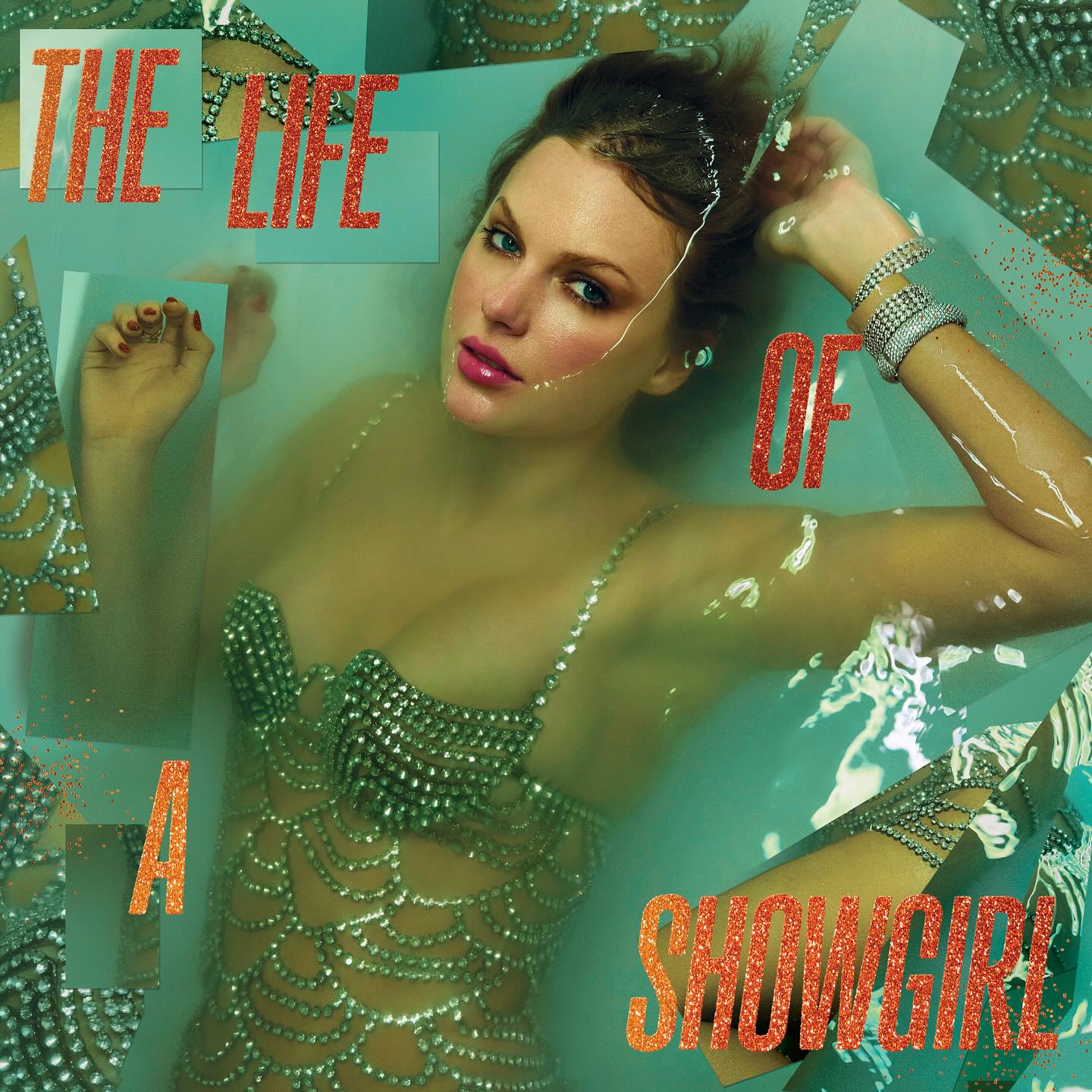
Photo Credit: Republic Records/TAS Rights Management/Mert Alas/Marcus Piggott
Few artists have experienced the grandeur and scale of Taylor Swift’s 19-year career. She has been the voice of a generation for almost two decades, appealing to a fanbase as both an inspiration and a mouthpiece for the complex emotions and experiences they find themselves tackling. Moreover, Swift knows how to craft a song. At the age of eight, I must admit that I didn’t resonate with the feelings she expressed in the likes of All Too Well, State of Grace or 22 (I was eight, after all). I also probably didn’t appreciate the metaphor-laced lyrics of her songs, but I did find myself dancing around my bedroom to the belting pop-country mashups on Red, and two years later, the masterpiece that is 1989.
But Swift has never been one to do what is expected of her: the movement from country to pop, the cutthroat clapback of Look What You Made Me Do, two surprise albums – folklore and evermore, in lockdown – and then an almost two-year tour celebrating the past 18 years of her discography. The reason why she is able to do this, of course, comes down to the cult-following and dedication of her fanbase, the self-proclaimed ‘Swifties’. When Swift announced she was re-recording her first six albums to reclaim ownership over her life’s work, fans were immediately on board and probably since the first release of Fearless (Taylor’s Version), have been seeking out easter eggs and drawing up their own theories as to which would be next. Swift simply cannot be pinned down.
When it came to her appearance on Travis and Jason Kelce’s podcast New Heights, Swifties knew from the drop of a silhouette that something big was coming. Still, what was not anticipated was a brand new 12-track album named The Life of a Showgirl, which was branded as ‘a peek behind the curtain’ at her life during The Eras Tour. Instead, it has turned out to be a somewhat sloppy love album dedicated to her now-fiancé, Travis Kelce, sprinkled with themes of fame, family and cancel culture, which have been explored with more nuance and complexity in the past. Holding a severely lower standard of lyricism, and safe, underwhelming production, Swift’s twelfth album had me asking at this stage in her career, who is she making music for? Who is the intended audience of The Life of a Showgirl?
The rollout and lead up to The Life of a Showgirl was unlike anything Swift has released in the past five years. Perhaps expectations have previously been set to an unrealistic standard, from the ‘Midnights Mayhem’ bingo-style announcement of each track title, with a ‘3AM Edition’ which followed the release of her tenth album, to the mammoth 31-track The Tortured Poets Department, which was accompanied by four extra songs even before the double-album reveal of The Anthology. So, when it came to the many countdowns on Taylor Swift’s website which revealed several CD and vinyl variants, a glittery orange cardigan and most recently acoustic version CDs, as well as the additional hour and a half Official Release Party fans can attend in cinemas, the promotion methods quickly switched from tense and exciting to stale and annoying.
This release has seen several other changes. Along with the album announcement, Swift went into detail about how during The Eras Tour, she had been travelling back and forth to Sweden in order to work with producers, Max Martin and Shellback. After years of Jack Antonoff’s introspective synthpop, fans hoped for a full-blown pop revival, expecting a return to the energy seen on Red, 1989 and reputation. Swift, Martin and Shellback have worked together on songs including I Knew You Were Trouble, Wildest Dreams and Delicate, and after working with Jack Antonoff on every album since 2014’s 1989, some Swifties were pleading for a break from the pair. However, unfortunately the reunion of the Swift, Martin, and Shellback trio has fallen short in comparison to previous releases, and in places on The Life of a Showgirl, the production feels disappointing and repetitive.
Opening track, The Fate of Ophelia, however, was the perfect choice for a lead single. It combines Shakespearean narrative (the character of Ophelia being taken from Hamlet) with Swift’s experience of being saved from insanity by love. The stripped-back folk intro, with a smooth Fleetwood Mac-esque drum roll and piano, is quickly disrupted by sultry melodies and a pitch shift reminiscent of Dua Lipa’s Training Season. Despite being an unexpected narrative perspective, the call and response echoes and claps on the song’s choruses add some airy layering, giving the song space to transform through several changing melodies.
Carrying on from this, Elizabeth Taylor is possibly the strongest song on the album. Telling tales of fame and likening herself to the Old Hollywood actress Elizabeth Taylor, who also gets a mention on the reputation track Ready For It…?, Swift explores what it’s like to be in a relationship while also being under the microscope of the media. The chorus offers some of the best lyrics on The Life of a Showgirl:“Be my NY when Hollywood hates me/You’re only as hot as your last hit baby”. Still, the subject matter is explored with much more nuance on songs such as The Lucky One, Clara Bow or even Cornelia Street.
Opalite signals a shift, and probably sees the peak of Martin and Shellback production. Echoes of a Speak Now (Taylor’s Version) vault track, I Can See You, can be heard in the song’s bassline and guitar riff, and it is certainly a fun one, but the chorus’ end, “oh-oh, oh, oh, oh, oh”, would perhaps be a better fit on Christmas Tree Farm. During her appearance on The Graham Norton Show on the night of the album’s release, Taylor explored her fascination with the fact that opalite is man-made and how she uses the title of the song as a metaphor for how happiness sometimes has to be manufactured.
Swift interpolates George Michael’s song of the same name on the fourth track, Father Figure, which is the first instance where we see an attempt to settle scores with ghosts of her past. Fans have speculated that the song is about Scott Borchetta, CEO of Big Machine Records, and the power which came with regaining ownership of her first six albums earlier this year. This was a refreshing shift in topic and explores “the way in which men move through the world with a sense of power” much like Swift’s track The Man. Unfortunately, it was delivered with basic production, and due to the line “I can make deals with the devil because my d*ck’s bigger” causing such a stir, the rest seems to go in one ear and out of the other.
Speaking of weak lyrics, The Life of a Showgirl’s track five Eldest Daughter is possibly the most underwhelming and baffling in Swift’s discography. If you’re unaware, the ‘track five’ is famous in Swiftie lore for being a heart-wrenching and vulnerable song, which usually explores some of the deepest topics on an album. The stripped-back, lonesome piano melody offered some hope, but with lyrics like “I’m not a bad bitch/And this isn’t savage”, along with the incorporation of modern lingo such as “trolling” and “memes”, the most I felt while listening to this song was in moments of cringe.
In Ruin the Friendship, we return to high school, a time and subject which seems to be a safety net for Swift. The introduction of this track reminded me of It Ain’t Over ‘til It’s Over by Lenny Kravitz, but with a calmer energy. It’s truly the bassline which pulls you through, but it does explore the complex emotions surrounding a lost love and what could have been if things were different at a younger age.
“A love letter to someone who hates you” is how Swift described Actually Romantic in The Official Release Party of a Showgirl, and listeners have been quick to guess that the someone in question is Charli XCX. Perhaps the story between these two pop icons is deeper behind the scenes, but from what we can assume, Charli XCX’s Sympathy is a knife explores the singer’s insecurities and feelings of intimidation when in the presence of a certain someone (assumed to be Swift). In retaliation, Actually Romantic lacks depth and reduces the opportunity to clap back to an echo of high school drama. Even away from the subject matter, the chord sequence and riffs are a recycled jumble of Teenage Dirtbag by Wheatus, or Where Is My Mind? by Pixies, with a slight sound of Weezer and the vocals of Olivia Rodrigo.
Wi$h Li$t sees Swift admit that she has returned to her romantic roots and hopes for a future with “a few kids” and “a driveway with a basketball hoop”, but once again the production leaves it feeling quite empty. Sonically, the chorus is very similar to Glitch from Midnights, but is a vague exploration of the variety of dreams and priorities people may have. It’s underpinned by a R&B type sound, similar to Honey, coming a couple of tracks later. This however, spins the meaning of words like ‘honey’ and ‘sweetheart’ from being belittling and demeaning to affectionate. The second verse has pacing similar to Lover’s London Boy and I Think He Knows, but the song seems to be flying under the radar so far.
The Jackson 5’s I Want You Back meets I’m Coming Out by Diana Ross for the next song. A shift which comes at the perfect time to revive some of the energy lost throughout The Life of a Showgirl, Wood blends some not so subtle innuendos, with a flurry of superstitions, to craft a highlight of the album. It’s a fun track infused with ‘70s disco inspirations, but still when we compare the quality of previous songs Guilty As Sin? (“My bedsheets are ablaze/I’ve screamed his name/Building up like waves/Crashing over my grave”) and False God (“The alter is my hips/Even if it’s a false god”) which explore similar ideas, it becomes clear that her fascination with Kelce’s “magic wand”, “redwood tree” or “hard rock” isn’t a stroke of lyrical genius.
Before the release of this album, CANCELLED! was my most anticipated song, but it is executed as a reputation outtake, and for good reason. More baffling lyrics including “did you girlboss too close to the sun?” and “Everybody’s got bodies in the attic/Or took somebody’s man” contribute to the cringeworthy attempt to justify the wrongdoings of friends. Like many other songs on The Life of a Showgirl, the melody is reminiscent of another: Lorde’s Yellow Flicker Beat. Still, Swifties have been thrown into a frenzy trying to figure out which of the singer’s famous friends this may be about.
The concluding titular track of Swift’s twelfth album features fellow pop sensation Sabrina Carpenter. Admittedly, I’m not the biggest fan of Carpenter’s music, but I think her voice fits this song better than Swift’s, and brings a unique country twang to it. People have been quick to point out that it sounds like a mixture of the Jonas Brothers’ track Cool, and something you’d expect to be on the soundtrack of The Greatest Showman. It is theatrical in places, which arguably fits the album’s theme, and tells the tale of a showgirl named Kitty, before shifting perspectives to Taylor Swift’s own career. She recognises that she is “immortal now”, standing at the top of the industry and watching as others long to follow her path and understand The Life of a Showgirl.
On this album, Swift doesn’t take us anywhere new. Some of Swift’s most impressive moments in her career have been when she has shifted creative gears. However, the image of the ‘showgirl’ has not been unfamiliar in her discography and brand leading up to this release. In the music video for Midnights track Bejeweled, we see Taylor fully embrace the glitz and glam of burlesque when dancing in a cocktail glass in a sparkly bodysuit with icon Dita Von Teese.
Similarly, the live performance and music video of I Can Do It With A Broken Heart displays the singer surrounded by feathers, and being hyped up to perform with a jazz backing track and 1920s cinematic visuals. I was hoping for this to be explored more in depth on The Life of a Showgirl: energetic pop with jazz inspirations, a glimpse into the preparation and demand of The Eras Tour, and even a sprinkle of what it feels like to have the music industry – and the world of pop – in the palm of your hand. More than any of the songs on The Life of a Showgirl, the ‘prologue’ which has been formed online through the five interconnected poems on different vinyl variants explores the themes I was hoping to be on the album.
In reality, behind the scenes of The Eras Tour, Swift was falling in love, so she is bound to explore this in song. It isn’t necessarily the issue that this is what she is delving into, it’s how she is writing about it. Many praise Swift as the songwriter of our generation. She has written beautifully about love in the past, on tracks like Daylight, Enchanted, invisible string, and Lover, but lyrics on The Life of a Showgirl just feel lost and lack substance. None of the songs stand out to me yet as being timeless, while many other Swift songs are, and the album has divided fans who once resonated with songs from the debut Taylor Swift era up to last year’s The Tortured Poets Department.
Taylor Swift has been known for writing relatable and emotional songs, which help her fans feel seen and navigate their way through life. Whether that be about love, loss, friendship, family, revenge, or even fictional characters, Swifties have always found a way to feel connected to her discography. But now? The truth is – not many can relate to her life of luxury and her loved up relationship with her NFL fiancé. It seems as though the fiercely precise and well-crafted lyricism we expect from Swift has moved into a state of relaxation and comfortability. It isn’t a matter of laziness as such, but perhaps Swift has stopped being a “pathological people pleaser”, striving for perfection in her lyrics, and instead is settling for mediocrity.
In the album’s titular track, The Life of a Showgirl, she says, “But you don’t know The Life of a Showgirl, babe/And you’re never, ever gonna”. So, maybe even on the other side of the door, Swifties will never get the levels of authenticity and transparency they so long to gain.
Photography Copyright 2025 © is reserved for its rightful owners as credited in the above article.
Text Copyright 2025 © Alexandra Pullen/ADRENALINE Magazine.
 Chloe Morris
  Madi Briggs